
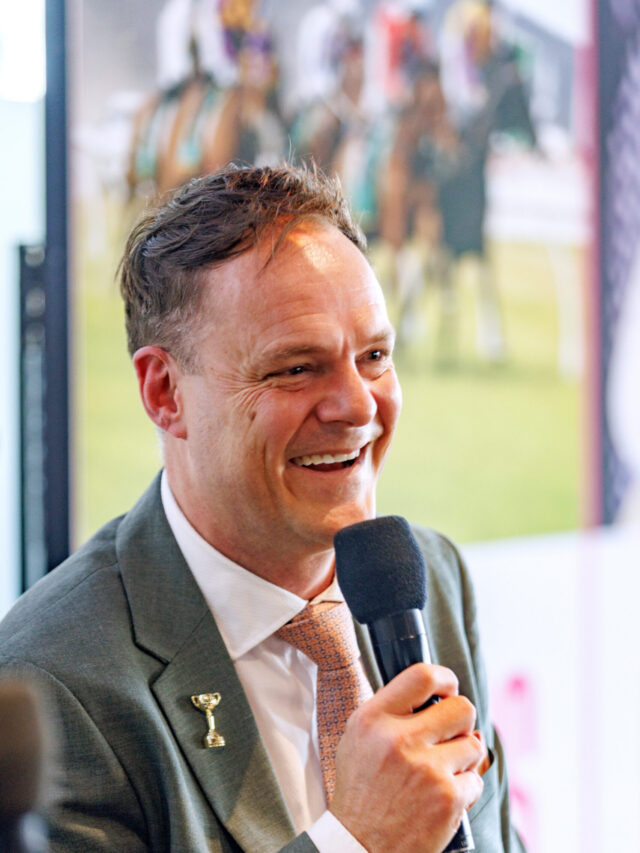
James Jordan spent Monday afternoon at a local Adelaide Hills butcher, stocking up on bacon and snags.
At 6am on Tuesday, he was trackside at the historic Oakbank Racecourse, serving up breakfast to trainers, jockeys and owners.



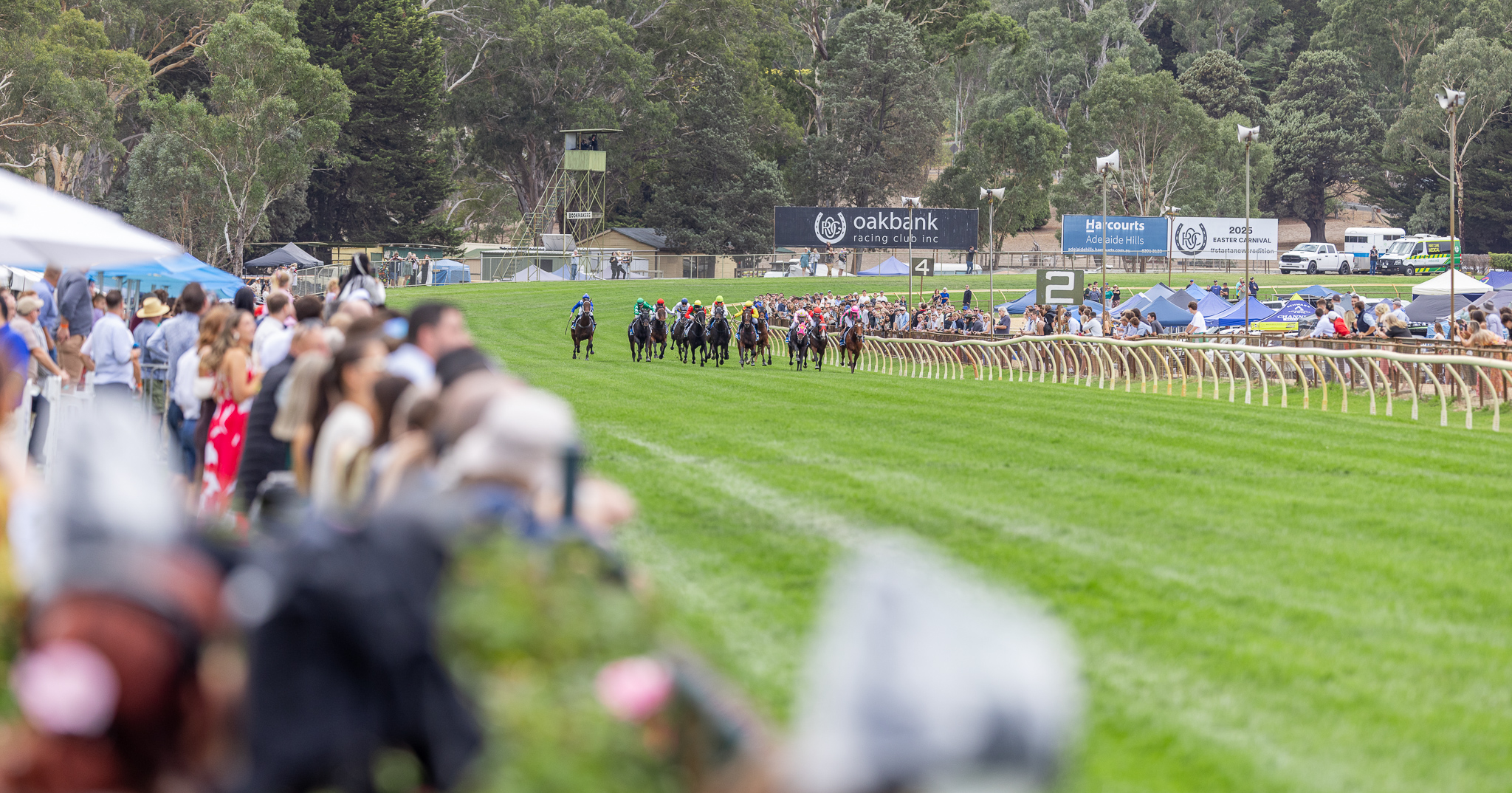
Gallops were in full swing and trainers from across the state had a final chance to give their horses a look at the unique circuit ahead of the iconic Easter Carnival.
This year marks 150 years of racing at Oakbank and, for the last five years, the respected form analyst has sat on the Oakbank Racing Club’s committee.
The position is voluntary but the blend of several of his biggest passions – namely thoroughbred racing and the sense of community amongst locals in the Adelaide Hills – meant he didn’t hesitate when offered a chance to help the club.
If he’s honest though, there have been times when he’s questioned if it was the right call.
For some, Oakbank lost its appeal when Racing SA made the decision to cease jumps racing in 2022. Much of the anger over the decision was projected onto the Oakbank committee and the bitter taste remains.
Jordan’s public profile made him a target of the hate.
Others know the Easter Carnival crowds had dwindled long before any doubt was cast over jumps racing in the state.
In any case, the job of revitalising one of the most iconic carnivals in Australian racing now falls on Jordan and his fellow committee members and he sees Saturday and Monday as the perfect opportunity to build some important momentum.
“We’re pretty positive and looking forward to it,” Jordan said.
“First of all, we want the track to race well, we want it to be a good spectacle and for people to enjoy betting on it.”
“We want the turnover to go up.”
“As much as we don’t directly benefit from the turnover in the sense that we don’t get a direct cut of it, I think it’s important when you’re part of a state-based ecosystem that we are holding our own.”
“Crowd is obviously an important measure – do I think we’ll get 30,000? I’d love to but it’s not going to happen so we are aiming for a good, healthy crowd.”
“And we want to make some money out of the carnival because at the end of the day, we need to stay afloat as a club.”
“It’s a balance between trying to attract a good crowd and not overspending on the event and losing money.”
“The other thing is we want to provide an event that the local community supports and feels strongly about.”
“I’d love to see the local community out there having a good time because it’s supposed to be a place where people across generations can come, bring a barbeque, bring your own food and alcohol.”
“It doesn’t have to be an expensive day.”
While the look and structure of the Easter Carnival at Oakbank has been tinkered with several times in recent decades, Jordan is an advocate for the current setup, which sees a feature, metropolitan-class meeting on Saturday and a more relaxed provincial-class meeting on the Monday public holiday.
It’s a model he feels fits better with modern day wagering trends, as well as people’s busy work, school and social schedules.
There are those that cling to history and compare the halcyon days of the sport – the combined two-day carnival crowds during the 1950s, 1960, 1970s and 1980s regularly exceeded 90,000 – with recent attendance figures that are a fraction of that.
What hasn’t changed, according to Jordan, is the charm and the simplicity. The course’s liquor licensing still allows patrons to BYO and while that means the club potentially misses out on a significant earn, Jordan hopes it is attractive to the everyday punter and community member feeling the financial squeeze in almost every other space.
“I follow and engage with some of the social media stuff and a lot of it is just the same old points that get raised,” he said.
“I can’t tell you how many people have said they used to go there with their parents in the 80s and there was 50,000 people there and now there are 7000 people and it’s a disgrace.”
“Back then, if you wanted to have a bet, you had to be on track. If you wanted to watch the racing at all, you had to be there.”
“Racing in general has seen this shift across generations and it’s now really hard to get tens of thousands of people at an event and the frustration for me is that a lot of people judge the success of Oakbank on whether or not the crowd can get back to what it was in the 80s or 90s.”
“If that’s our measure for success, then we’re destined to fail.”
“I can’t see a racetrack in South Australia getting 50,000 people there for anything.”
“You can put a Kylie Minogue concert on, spend $2 million on it and bring in $1.5 million in revenue and pat yourself on the back and say that you got a good crowd there.”
“But we are about survival, longevity, honouring the club and putting on a service for the racing industry and for the state so I don’t think it’s just about crowd numbers.”
“There are a lot of people that are still unhappy with the jumps fiasco and how it ended here in South Australia and they feel they need to carry on but at the end of the day, a lot of these people aren’t supporters or members of the club.”
For Oakbank to survive another 150 years and financially prosper, Jordan believes the Club needs to tap into alternative revenue streams, namely non-raceday events.
The Carnival will always remain a priority but in order to elevate it even more, he wants the Club to have a stronger financial base.
“I think most clubs would understand that it’s very difficult to bring in a huge amount of revenue by just having race meetings,” he said.
“At the end of the day, we are a racing club at our core so any revenue that we can gain from anywhere else goes back into the facilities which make for a better raceday experience for members and participants.”
“But I think the revenue streams that we have to investigate are outside of racing.”
“We’re in a very good location, it’s picturesque in the Adelaide Hills and we’ve got a great space that I think is probably underutilised outside of the racing industry.”
“Certainly, it’s been a priority in the last 12 to 18 months to investigate ways that we can increase our revenue stream and the end game is to improve the raceday experience.”