
It’s the number one message drummed into staff at Racing SA’s head office: ‘full and competitive fields’.
They don’t but it’s been the mantra Nick Bawden and his team have lived and breathed in recent years.
It’s one of the reasons why the Racing SA CEO was proud to open up the latest copy of Racing Australia’s annual fact book, which shows his state as the clear frontrunner when it comes to average field size.
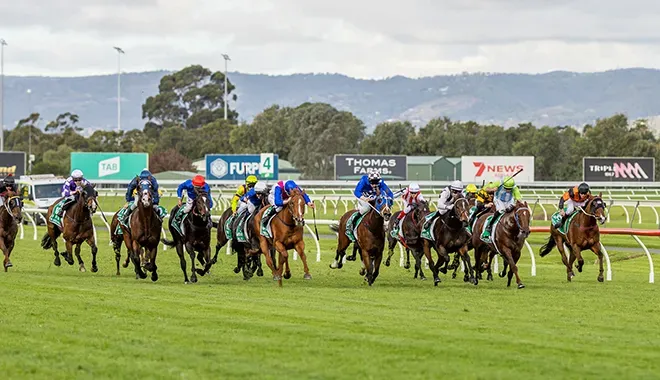
At TAB meetings in SA during the 2024/25 racing season, the average field size was 10.8 – significantly higher than the 9.6 average for the rest of the country.
South Australia also led the way for growth in starter numbers – up more than 15,000 or almost 4% season-on-season.
While the state hasn’t been immune to softening wagering felt by administrators right across the country, Bawden believes the growth in these key areas has helped SA weather the storm a little better than several of the bigger racing states.
“We’ve been really strong over the last four or five years that to really grow the industry, we need full and competitive fields,” Bawdin said.
“That’s particularly the case for Saturday races so that’s what we’ve based our program on, it’s what we’ve centered our consultation with participants around.
“We’ve been very direct about that.
“There are times where perhaps there isn’t an ideal race for a horse but we’ve tried to be open and transparent with the ATA, the Jockeys Association and the Owners Association to say that we need to get to this point and build our field sizes.
“We’re a wagering industry and field sizes are so critical to that.
“We’ve needed everyone to understand that we were doing it for the greater good and to grow the pie and
“The plan is to keep growing the industry so there is more for everyone.”
In somewhat of a contrast to the ‘full and competitive fields’ mantra, Bawden said the recent addition of a 10th race to Saturday metropolitan was designed to better service trainers and owners rather than punters.
Many of the new races have resulted in fields for three, four and five but were added to the program following consultation with trainers.
“We’re at the stage – and we will see this in the next fact book – that our field size average has decreased slightly,” he said.
“Part of that has been what we’ve done in the last few months where we’ve programmed a 10th race each Saturday.
“It’s an extra $530,000 that jumps into the racing ecosystem here in South Australia.
“It’s been ‘on need’ which basically enables us to run races that trainers want, even if we cop a hit on the wagering.
“We are OK with running a three horse two-year-old race, we’re OK with that because we know people need to
“Full and competitive fields is still the mantra but we’ve got to the point where we can supplement our programming with some industry servicing.
“It gives people the confidence to buy and invest in younger horses.”
On investment and growth of racehorse ownership in the state, Bawden said the numbers published in Racing Australia’s Fact Book tell a positive story.
The individual number of owners in South Australia grew by almost 10% during the 2024/25 racing season, while the number of syndicates jumped up 1% year-on-year during the same period.
While the gross and average may have been down at the recent Magic Millions Adelaide Yearling Sale, Bawden said he was buoyed by the spread of local trainers and owners investing in yearlings.
He said the Racing SA’s consumer-facing ‘Dare To Dream’ brand has also played a role in driving owner engagement and recruitment in the last 12 months.