
Something I’ve been intrigued by recently is stride frequency and how it correlates with a horse’s optimal distance, a concept regularly discussed by influential English analyst and pundit, Simon Rowlands.
At its simplest, velocity equals stride length multiplied by stride frequency, or cadence. In practical terms, it’s how far a horse travels with each stride, and how quickly it can repeat that motion.
Elite sprinters almost always operate at 2.5 strides per second or higher. Slower stayers are typically closer to 2.2, conserving energy with a slower rhythm. Higher cadence creates speed and acceleration, but it’s rarely sustainable over longer distances. As with any rule, there are exceptions. Winx could peak at an extraordinary 2.63 strides per second, yet conserve energy by ‘switching off’ mid-race, lowering her cadence.
By measuring strides per second, it’s possible to identify whether a horse is a sprinter, miler or stayer well before results can confirm, offering a powerful lens beyond traditional ratings or pedigree analysis.
I raise this because of Beiwacht in Saturday’s Black Caviar Lightning Stakes.
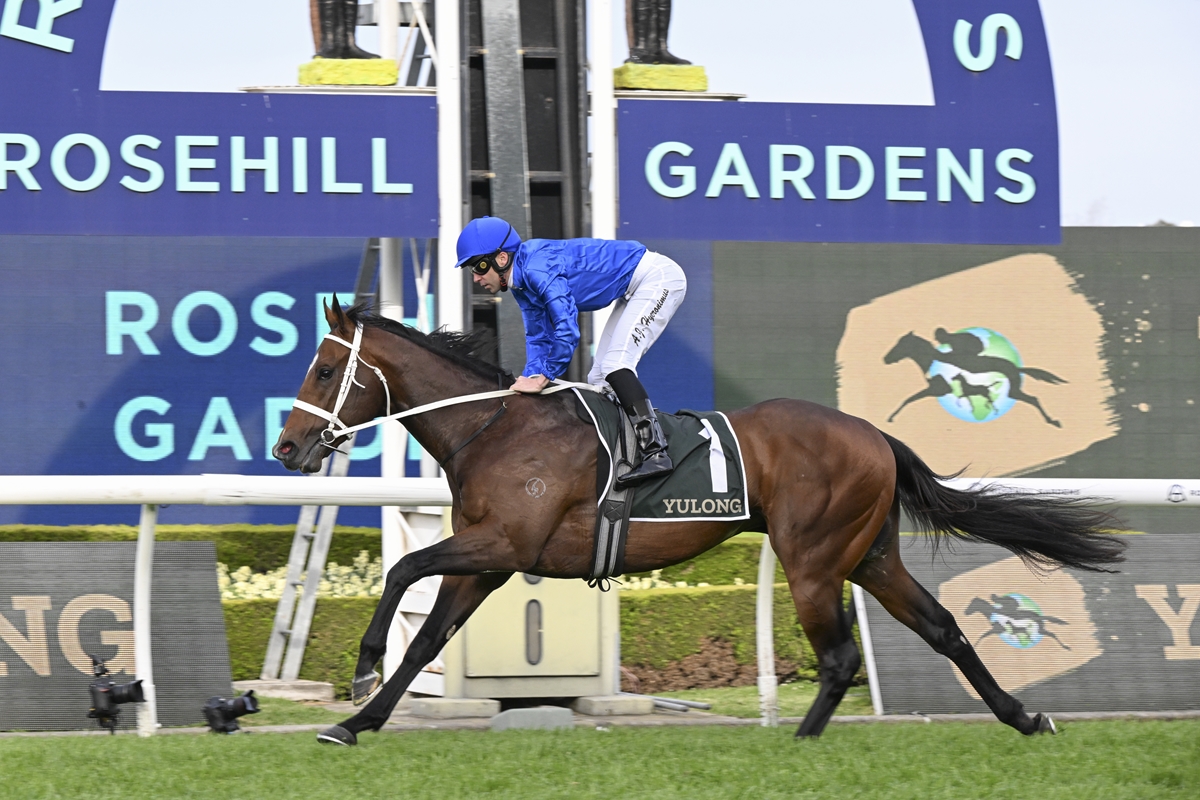
The Golden Rose winner and Rosehill 1400m track record holder is a tremendous three-year-old, but also an illuminating stride-frequency study.
By my calculations, Beiwacht consistently operates between 2.3 and 2.45 strides per second, never exceeding that range.
Sectional split times over the concluding 800 metres of the Golden Rose:
- 800–600: 2.34
- 600–400: 2.42
- 400–200: 2.43
- 200–F: 2.31
This suggests to me that he doesn’t have the capabilities of an elite sprinter. Rather, he’s a horse built to sustain a strong pace over seven or even eight furlongs.
In the Run To The Rose, the eventual winner, Tempted was able to lift to 2.57 strides per second between the 400–200m, while Beiwacht maxed out around 2.4. However, over seven furlongs in the Golden Rose, Tempted was not able to sustain such intensity, whereas Beiwacht, still below 2.45, simply outstayed her.
Tentyris and Giga Kick have displayed the ability to stride upwards of 2.55 per second. Over 1000 metres, that edge in turnover is significant.
Like anything in racing, nothing is absolute, but the evidence points strongly to Beiwacht being a 1400-metre horse, possibly even a miler.
A tremendous talent, but he has been set a task by his connections.
I’ve marked Beiwacht closer to 15/1.