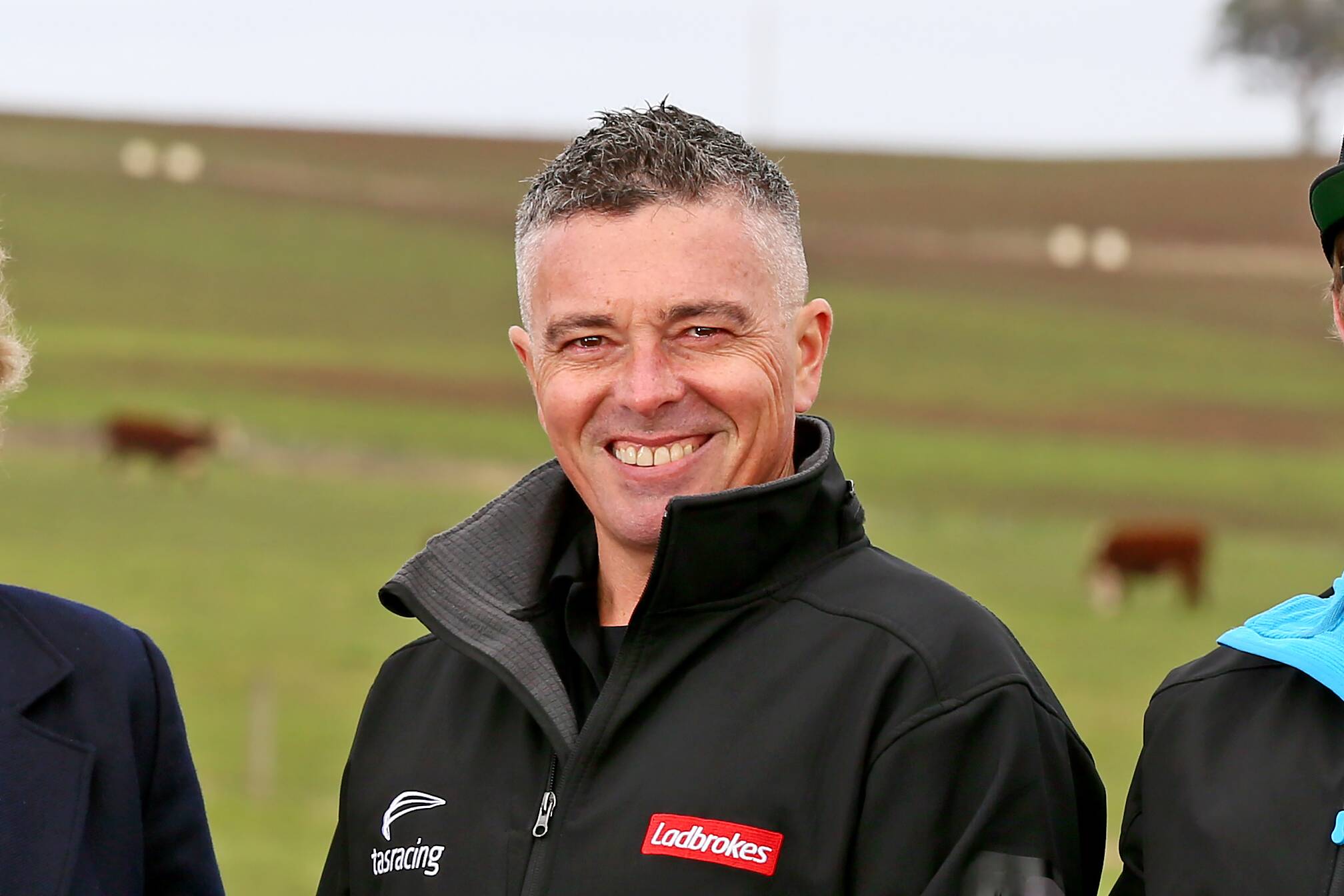


Tasmania Racing’s CEO Andrew Jenkins said their summer racing festival is shaping as one of its best in years, with strong wagering results and impressive local stars that could be set to impact big races across Australia.
A return to free-to-air for Tasmanian racing has also seen a significant boost in wagering, as their summer carnival heads towards a number of Group and rich races.
Crowds, wagering and field sizes are all up year-on-year Tasmania Racing CEO Andrew Jenkins said, ahead of the Tasmanian Derby on Friday night and the Group 3 Hobart Cup on Sunday.
READ: Matt Reid’s runner-by-runner preview of Sunday’s Hobart Cup
Jenkins said they have reshaped their summer program to maximise its appeal by moving the Magic Millions classic races to coincide with the Tasmanian Derby.
“We think that really augments the black-type Derby,” he said.
“You’ve got the two-year-old classic, then the three- and four-year-old classic, and then you roll straight into Hobart Cup Day on Sunday, which has three black-type races of its own.”
READ: Steve Christie’s preview of Derby Day
The encouraging signs for Tasmania were evident as early as the Devonport Cup meeting in January, where crowd numbers were up on last year and local Glenn Stevenson going back-to-back.
But the big boost came from a massive spike in wagering thanks to Tasmania finally being able to be back on free-to-air, now with racing.com.
The free-to-air coverage was anchored by Matt Reid and featuring respected local caller Colin McNiff.
‘’Having certainty with our primary broadcast partner in Sky and then being able to augment that with free-to-air coverage for the first time since around 2012 is massive,” Jenkins said.
“We saw an increase in wagering that was significant, around 30 per cent.
“Now, when you normalise that because there were 10 races instead of nine last year, it’s probably closer to 20 per cent.
“It’s only a sample of one, of course, but it’s still really positive.”
Jenkins said the state’s smaller industry is actually part of its charm, especially given they believe the quality of racing is strong.
Several on-course entertainment options are sold out for the Cup Day on Sunday, with Jenkins believing Tasmania’s racing product itself remains a key drawcard, as does the smaller crowds, lack of traffic and ‘’beautiful’’ scenery around each track.
“The competitiveness and evenness of the racing is a real attraction for fans and punters,’’ he said.
“Our tagline says it all – the grass is greener, the people are friendlier, the drinks are cooler.”
“You’ve got boutique venues with five to ten thousand people, great atmosphere, amazing hospitality, great service without massive crowds or traffic. It’s really good value.”
For punters, Tasmania also offers a distinct advantage.
“Like any smaller jurisdiction, you’ve got a smaller horse population,” Jenkins said. “If you’re a half-smart punter, it’s a lot easier to get a handle on the form.
“The tracks race fairly – every horse gets its chance.”
“And there are a few this year that look like likely types.”
“If you look at the young talent – horses like Aristopolos, Mazzini and Sanniya – these are proper horses.”
“We’re hoping they continue through the autumn and maybe even into spring campaigns on the mainland.”