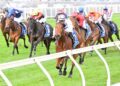
The Derby is, or more precisely was, what was known as a “Blue Riband’ event.
A race of the highest quality and excellence.
Sadly, it is so far removed from that level it is embarrassing. We hear about tradition all the time in racing, and tradition is a wonderful thing, until it isn’t.
The Derby tradition of 2500m has seen the Victorian edition reduced to what is arguably the poorest of the four main Derbies in Australia.
I noted Gai Waterhouse being extremely vocal about maintaining the Derby in its current form. Yet Gai, a VRC Ambassador, has avoided the race like the plague with only two runners in the race over the past decade.
She had the runner up in the Spring Champion Stakes last Saturday, he has gone to the paddock. Clearly he was set for that race, not the Derby.
Peter V’landys moving that race to a week before the Derby whilst the VRC were asleep at the wheel has rendered any ongoing discussion of the future of the race or the status of the race irrelevant.
So how did the original Derby achieve this almost mystical position in the pantheon of world horse racing in the first place?
It is well documented that the race got its name from the 12th Earl of Derby. At a party following the running of The Oaks in 1779, a race for three year old fillies named after the family estate, it was decided that a race for the colts would take place the following year.
Legend has it that a coin toss took place between the Earl of Derby and a guest at the soiree, the Steward of the Jockey Club, Sir Charles Bunbury.
Derby won the coin toss and the race was named after him. I have always wondered if the Earl of Sandwich had been a guest and won the coin toss would we be discussing the running of the Victoria Sandwich?
The champions of the English turf have won the Derby, but I have always loved the story of the winners of 1844 Orlando and Aboyeur in 1913.
Orlando was awarded victory in his race after it was discovered that the horse first past the post, Running Rein, was actually a four year old called Maccabeus.
A good old ring in, a timless racing tradition warmly adopted in Australia for decades. The 1913 winner was Aboyeur, the despised 100/1 outsider, who was awarded the race following the disqualification of Craganour for interference.
This was the Derby where suffragette Emily Dawson ran on to the track and was killed by King George V’s horse, Anmer.
Such was the controversy of the race, Aboyeur was sold to Russia where he disappeared during the Revolution. Chief Steward of the Moscow Jockey Club, Sergei Putin denied any involvement..
Charles Dickens attended the Derby in the 1850s and notes “the entertainers, musicians, clowns and jugglers”.
Birdcage attendees, take note. The last Derby I attended on Epsom Downs was sponsored by EveryReady Batteries. The irony didn’t escape me.
Our own VRC Derby, run since 1855, has had some wonderful champions win the race but those days are long gone and this year’s edition does seem to be at the mercy of the favourite Observer. He’s a good horse, has the best form and drawn perfectly.