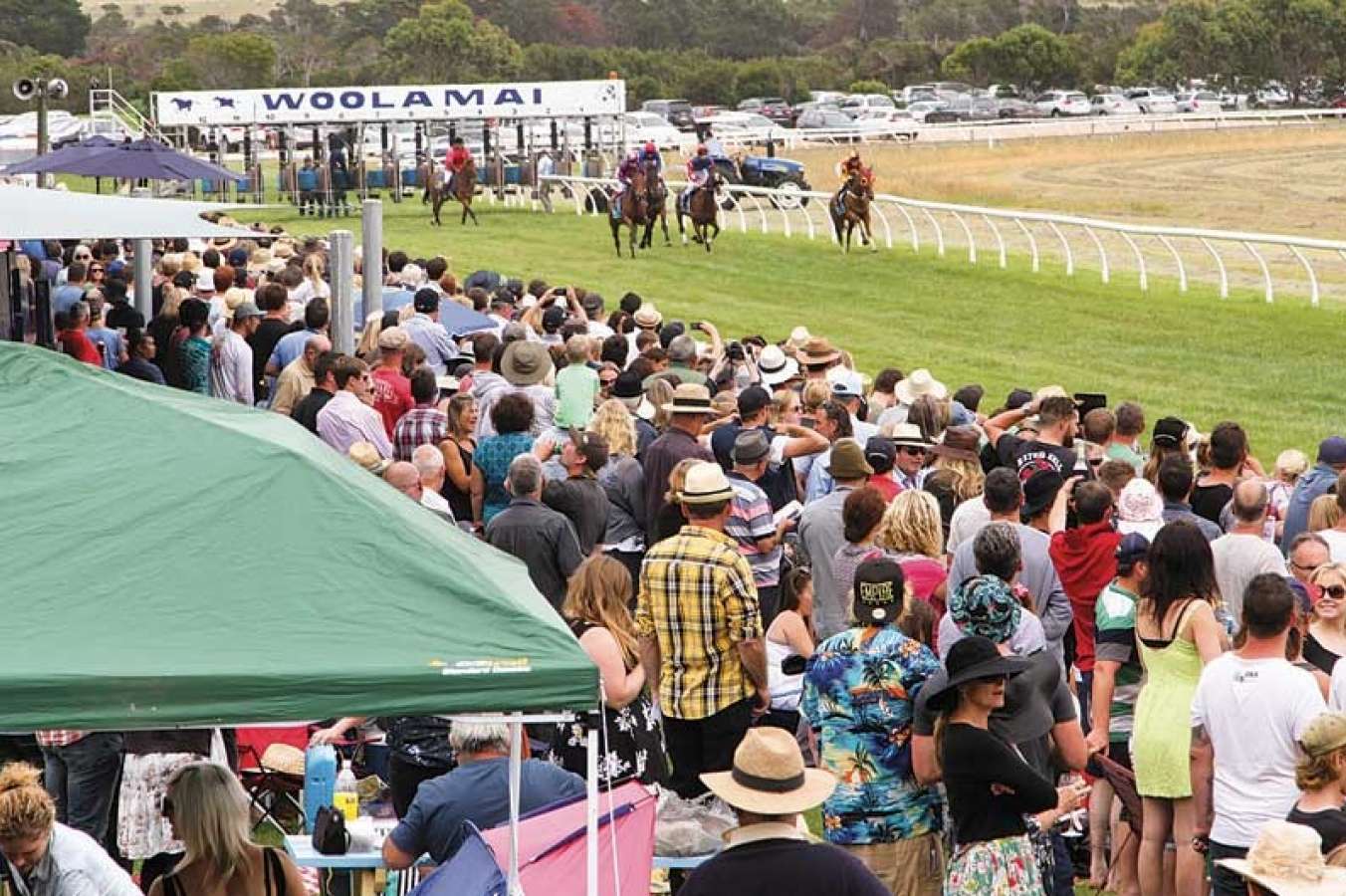

The abandonment of Saturday’s picnic meeting at Woolamai before a race was run was disappointing, but more than that, it felt familiar.
Woolamai is the sort of place racing loves to point to when it talks about summer, community and atmosphere. Great location, great vibe, and some of the best surf in the state just down the road. Picnic meetings like this aren’t just about the racing itself, they’re about the day. Christmas parties, bucks and hens groups, birthdays, locals and first-timers getting their first real taste of the sport.
The crowd would have stayed, no doubt. As the weather improved, it probably still turned into a perfectly good afternoon. But having no races run live on track inevitably dulled what should have been a showcase day for picnic racing.
The explanation from Racing Victoria was straightforward.
“Today’s Picnic meeting at Woolamai was abandoned before the first race, with the track deemed unsuitable for racing by RV Stewards. Once the Stewards had conducted an inspection of the track, a significant number of divots were identified,” a statement read.
“Despite the remedial work subsequently undertaken the Stewards, in consultation with all riders who had arrived on course and club officials, deemed the track unsafe for racing and so the meeting was abandoned in the interests of jockey and horse welfare.”
That decision, in isolation, is hard to argue with. Safety has to come first, every time.
What gives Woolamai its sense of déjà vu, though, is the broader context.
Participants arrived on course expecting to race. Horses were prepared and floated, jockeys booked, staff rostered, and patrons made the trip under the assumption the surface was suitable. For a meeting to be abandoned before the first race suggests either a late and sudden deterioration, or that concerns only became fully apparent on the day.
Given the previous meeting was run on a big track, the latter explanation would probably start a short-priced favourite.
And Woolamai isn’t alone.
Over the past few seasons, picnic racing – and racing more broadly – has endured a run of track-related interruptions. Abandonments, incorrectly rated tracks and emergency inspections have all become a little more common than anyone would like. Each case has its own explanation, but taken together they hint at a system under pressure rather than any single failure.
As discussed recently in are there too many racetracks? Racing’s uncomfortable question, the sport is asking a lot of its infrastructure. More meetings, more variable weather, ageing tracks, rising costs, and less margin for error. That pressure is felt most acutely at venues that race infrequently.
Picnic clubs sit right at that edge.
They operate with limited budgets, rely heavily on volunteers, and yet play an outsized role in racing’s ecosystem. Picnic meetings are often the sport’s most effective entry point for new audiences. They bring people through the gate who aren’t rusted-on racing fans and give the industry a chance to show itself at its most relaxed and accessible.
That’s why days like Woolamai matter.
When a picnic meeting doesn’t get away, the impact goes beyond a lost fixture. Momentum stalls, confidence takes a knock, and an opportunity to engage a different crowd slips by.
Compensation helps paper over the costs incurred by participants, but it doesn’t offset the lost opportunity.
If nothing else, Woolamai felt like déjà vu. Picnic racing has had several tough seasons with a combination of COVID and track-related issues. But it remains where racing meets the public at ground level – big crowds, grassroots clubs, and plenty of first-timers discovering the sport.
If that part of racing is to be protected for the people who turn up in numbers, it needs the same level of care and support from those who oversee it, led by Racing Victoria’s EGM Tracks and Infrastructure Jamie McGuiness.
Because when racing gets it right at places like Woolamai – sun out, surf pumping nearby, crowd in good spirits – it’s one of the best versions of the sport there is.
And that’s worth getting right.