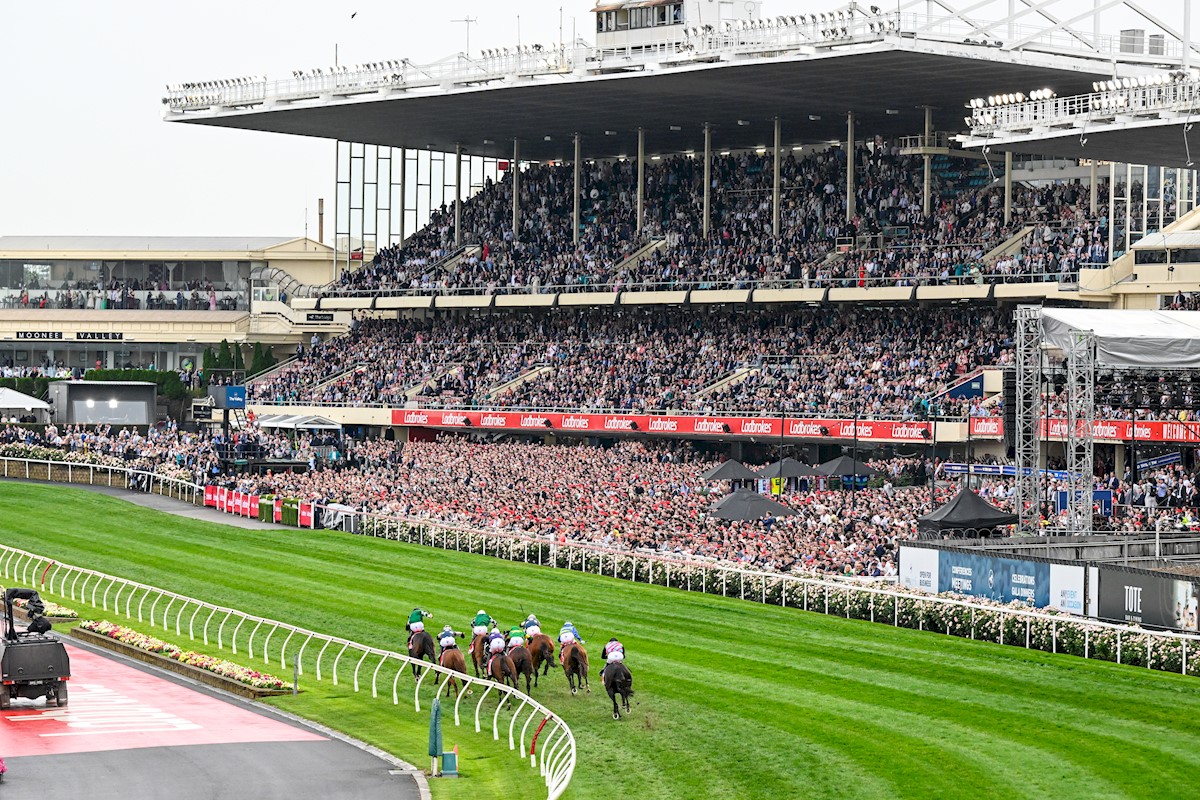

The reaction to Paul Tatnell’s exclusive Betsy report this week regarding merger discussions between the Melbourne Racing Club and the Moonee Valley Racing Club was fascinating.
And notably, much of it was supportive.
There were certainly some traditionalists who recoiled at the idea, but the overwhelming response from many racing participants and fans was simple: why hasn’t this happened already?
Because whether people like it or not, club mergers are almost certainly part of Victorian racing’s long-term future.
And frankly, they should be.
Not simply because they can create operational efficiencies or reduce costs, although they undoubtedly can. The strongest argument for mergers is that they have the potential to make racing simpler, more affordable and more attractive for the people the industry ultimately depends on: punters, racegoers and members.
For too long, Victorian racing has operated under the assumption that structures built for a different era must remain untouched forever. Tradition absolutely matters in racing. Heritage matters. Identity matters.
But customer experience matters too.
New South Wales and Queensland worked this out years ago when their major metropolitan clubs merged into centralised structures. Have those models been perfect? Of course not. Every major sporting organisation has governance issues, internal politics and operational challenges from time to time.
But the underlying logic behind consolidation was completely sound then and remains completely sound now.
Racing is not AFL football. It is not a sport with hundreds of thousands of tribal members packing stadiums every weekend regardless of conditions or scheduling. Outside of the major carnivals and marquee racedays, metropolitan racing crowds are often modest at best.
Yet somehow in Victoria we continue operating under a model where someone wanting to fully engage with metropolitan racing is expected to maintain separate memberships for Flemington, Caulfield/Sandown and Moonee Valley.
Three memberships. Three separate fees. Three different club systems.
The current setup actively discourages engagement. At a time when consumers have endless entertainment choices and every discretionary dollar matters, racing has somehow created a structure that makes participation more expensive, more fragmented and more confusing than it needs to be.
Imagine instead a single Victorian metropolitan membership.
One membership. One set of benefits. One customer experience. Access to every major metropolitan raceday regardless of venue.
The idea of one membership providing all-access to Victorian metropolitan racing is not radical. It is exactly the sort of customer-focused thinking racing desperately needs.
It would create opportunities for stronger membership packages, better loyalty programs, more compelling offers and a far more seamless experience for people who simply want to enjoy the sport.
The commercial benefits are even harder to ignore.
Right now Victorian racing duplicates entire corporate structures across multiple metropolitan clubs. There are separate executive teams, separate marketing departments, separate commercial divisions, separate administration structures and separate track management operations all serving essentially the same industry and often the same customer base.
Then come the layers of governance and politics that racing has become infamous for.
There are boards, committees, sub-committees, advisory groups and endless internal power plays. Racing already spends far too much time navigating politics instead of focusing on growing the sport, improving the customer experience and strengthening the industry commercially.
A merged metropolitan structure would immediately create substantial operational savings.
The key question then becomes what happens to those savings.
Ideally, a significant portion should flow directly back to the customer through improved facilities, stronger membership benefits, technology upgrades, wagering innovation and initiatives designed to make racing easier and more enjoyable to engage with.
Because the reality is Victorian racing no longer has the luxury of carrying endless duplication simply because “that’s how it has always been done”.
The advantages extend beyond staffing and administration.
A single metropolitan club would have significantly greater buying power when negotiating with suppliers and contractors across food and beverage, events, venue operations, maintenance and infrastructure. It would also create far greater flexibility around programming and race meeting management.
At present, moving meetings or adjusting schedules can become an exercise in negotiation and territorial politics between clubs. A unified structure would allow the industry to react faster and more pragmatically when issues arise, whether they involve weather, track management or scheduling pressures.
Racing continually talks about growing wagering turnover and attracting new customers, yet very little structural discussion is framed through the lens of the punter.
A simpler metropolitan structure creates opportunities for unified loyalty programs, better race-day experiences, improved technology offerings and more coordinated customer engagement across all major venues.
Importantly, Victoria already has evidence that mergers can work.
The merger between Cranbourne and Pakenham created a far stronger and more commercially powerful racing club than either would likely have become independently. Scale matters in modern sport and entertainment. So does commercial leverage.
And then there is the differing financial position of the metropolitan clubs themselves, which only strengthens the argument for a more unified long-term structure.
The Melbourne Racing Club is in a strong financial position, largely because it has invested heavily in diversified revenue streams outside racing, including gaming venues and other cash-generating assets. The Moonee Valley Racing Club also has meaningful non-racing operations through gaming and its catering business, although it is clearly facing financial pressures linked to its major redevelopment project as rising construction costs and higher interest rates place downward pressure on the housing market.
The Victoria Racing Club, meanwhile, does not have the same level of external revenue-generating operations as the MRC, or even the MVRC. Nor does it possess the same significant land banks that could potentially be monetised to help future-proof the organisation financially. It also has a stack of debt.
That reality makes the conversation around metropolitan racing structures even more relevant. Because while some clubs have diversified and built stronger commercial buffers outside racing, others remain far more exposed to the challenges facing the industry itself.
The irony is that many within racing openly acknowledge these realities privately. There is widespread acceptance that the industry needs to become leaner, more efficient and more commercially sustainable.
Because eventually Victorian racing is going to have to decide whether it wants to preserve old structures for sentimental reasons or build a metropolitan model that is commercially sustainable, operationally efficient and genuinely attractive for modern racing fans.
One membership with all-access to metropolitan racing would be simpler, cheaper and more appealing for consumers. A unified metropolitan structure would create more opportunities to reinvest into customers, racegoers and punters, while also reducing duplication, improving efficiency and cutting the politics that too often consumes the industry.
At some point the industry needs to stop asking whether mergers feel uncomfortable and start asking whether the current model genuinely makes sense anymore.
Because increasingly, it doesn’t.