
Gear changes can look like little more than fine print buried at the bottom of a formguide.
Blinkers first time. Tongue tie on. Bar plates off. Earmuffs pre-race only.
It can read like the contents of a very strange toolbox, but for punters, gear changes can provide valuable clues about a horse’s health, behaviour and potential to improve.
Sometimes they tell you a horse has had an issue. Sometimes they tell you a trainer is trying to fix one. And every now and then, they’re a flashing light that a better performance might be coming.
We saw a few beauty examples over the weekend.
Happy feet, happy horse
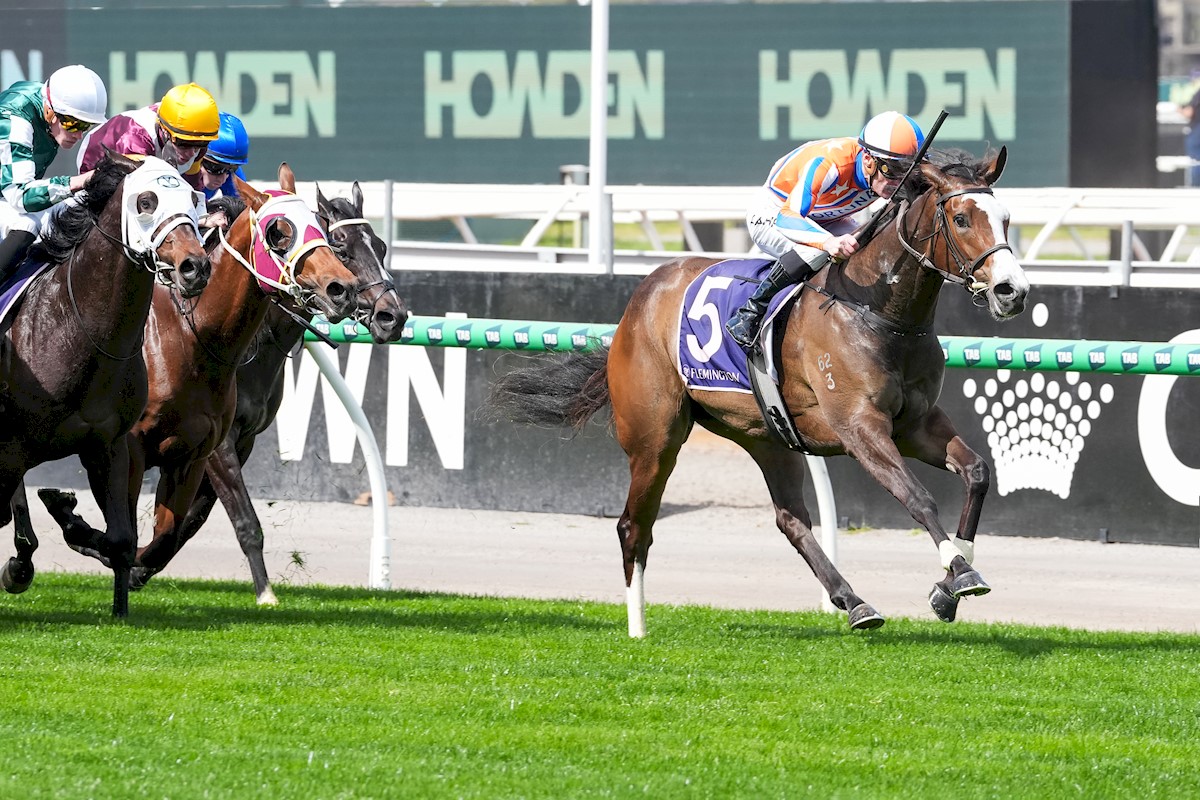
Lara Antipova went into Saturday with Equicast and synthetic hoof filler coming off for the first time after wearing both first-up.
Equicast is essentially a wrap designed to provide temporary protection and support to the hoof, while synthetic hoof filler can be used to repair or reinforce areas of the hoof wall that are brittle, cracked or worn, creating a more solid surface for shoe nails.
Put the two together and it suggested Lara Antipova had required a little extra help with her feet.
So when both came off on Saturday, it was worth taking notice. Whatever had necessitated that additional protection had seemingly improved.
She duly won.
That doesn’t mean you should start blindly backing every horse when Equicast comes off, but it is exactly the sort of little clue that can help complete the form puzzle.
Bar plates are another one worth noting. They provide additional support to the hoof and can be a sign a horse has been dealing with foot issues.
And feet matter. A lot.
We’re talking about an animal weighing somewhere between 400 and 600kg, travelling at around 60km/h, with the whole operation relying on four relatively small hooves.
No hoof, no horse, as they say.
Blinkers on, business time
Another significant gear change on Saturday came with Shockletz. Blinkers went on for the first time and she promptly produced a dominant win in the Archer Stakes to book her Melbourne Cup berth.
Horses are flight animals and they don’t all behave perfectly when asked to race. Some drift up and down the track, some gawk at the crowd or infield and others seem more interested in everything happening around them than actually beating the horse alongside them.
They’re a bit like humans. Some need fewer distractions.
Blinkers are cups fitted around the eyes that restrict peripheral and rear vision. The theory is beautifully simple: stop looking around and get on with the job.
For some horses, the transformation can be dramatic.
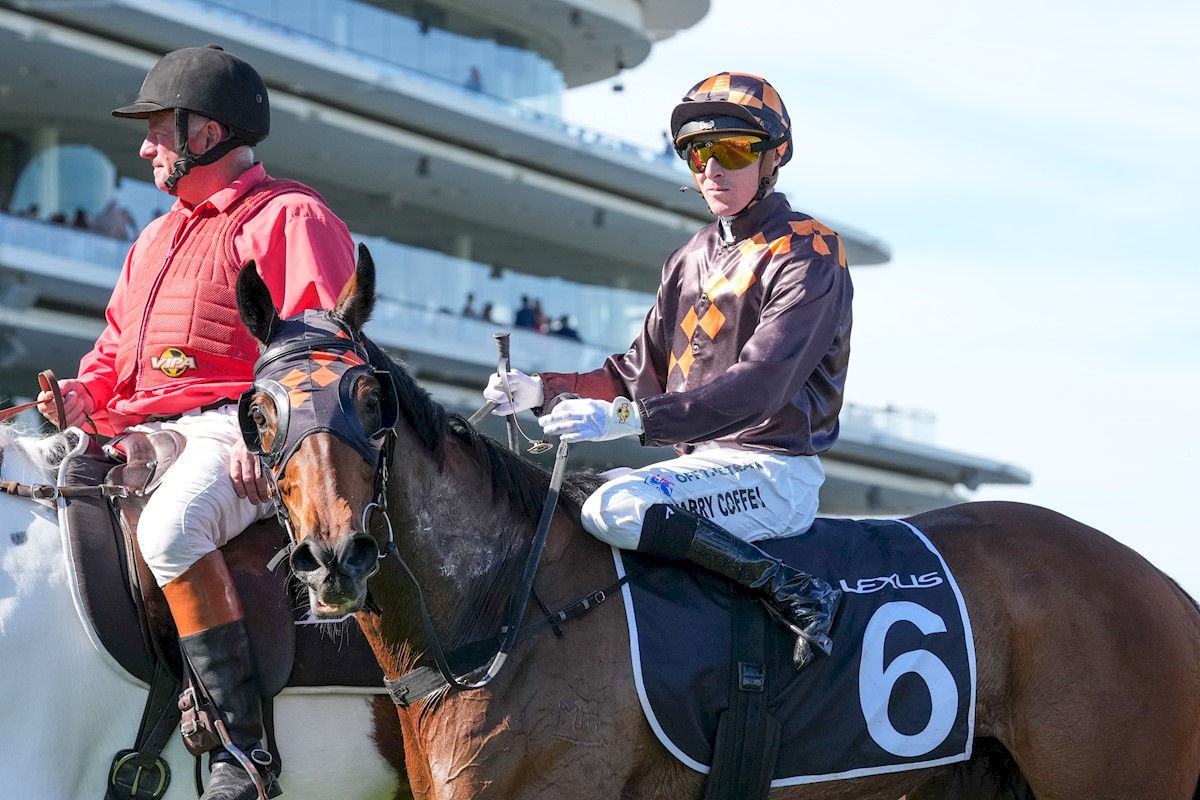
They’re not magic, though. Blinkers can cause some horses to race too keenly and first-time wearers can occasionally miss the start. But if you’ve identified a talented horse that simply hasn’t been putting its mind on the job, blinkers going on is absolutely worth noting.
And blinkers aren’t the only option. Trainers have winkers, cheekers, pacifiers and one-eyed blinkers at their disposal.
Essentially, there’s an entire eyewear department for racehorses.
Turn the volume down
Then there are horses whose problem isn’t what they can see, but what they can hear.
Earmuffs are widely used to reduce noise and help excitable horses relax.
Red earmuffs are worn before the race and removed at the barriers, while black earmuffs stay on during the race.
They’re basically racing’s noise-cancelling headphones.
For punters, their use can cut both ways. Earmuffs might tell you a horse has behavioural issues, which can be a negative. But if you’ve already identified a talented horse that has been costing itself through poor behaviour, the addition of earmuffs could be exactly what it needs.
Nose rolls can serve a similar calming and concentrating purpose.
They’re the fluffy piece of lambswool sitting across the bridge of a horse’s nose and can restrict parts of its upward and downward vision. Peter Moody has used them with enormous success over a long period, particularly with horses inclined to get their head up or lose concentration.
The ultimate gear change
And then we arrive at the most significant gear change available to a racehorse.
Gelded.
Peter Gelagotis-trained Wetumpka returned at Sale on Sunday having undergone racing’s ultimate equipment adjustment since his previous preparation.
Let’s just say he arrived at the races carrying two fewer pieces of gear than last campaign.
He was heavily backed and absolutely bolted in.
Sale Race 5 | Wetumpka
That was impressive! Once the well-backed runner got the gap, he exploded to win the cash! @gelagotisracing
🥇 Tipped by @BenAsgariRacing
📺 Ch. 78/68, Foxtel 529, Kayo or via our app
REPLAYS: https://t.co/HEhdpozFmy pic.twitter.com/pcslDNWCHv— Racing.com (@Racing) September 13, 2026
Colts, like plenty of young males across most species, can become easily distracted as they mature. They can be aggressive, difficult to manage and occasionally have their mind on activities that have absolutely nothing to do with winning Race 5 at Sale.
Gelding can remove much of that hormonal influence and help a horse concentrate on being a racehorse.
There’s a reason punters have called it the ultimate gear change for generations.
Wetumpka certainly seemed comfortable with his new career priorities.
Some changes are warning signs
Of course, not every gear change should have you reaching for the wallet.
Bandages are one I treat cautiously. Their application can suggest a horse requires additional protection or support and, while there can be perfectly manageable reasons for wearing them, they’re something I want to investigate rather than ignore.
The formguide should alert you to bandage changes, but they’re also worth looking for in the mounting yard.
Then there’s breathing gear.
A horse’s ability to get oxygen efficiently is obviously fundamental to performance, but horses can experience problems with their airway or tongue. Some undergo surgery, while others race in gear designed to help.
Tongue ties are extremely common and can be as simple as material used to secure the tongue, helping prevent it from interfering with the bit or airway. Trainers also have various tongue-control bits and other equipment available.
If a horse has previously stopped quickly or made respiratory noise, a breathing-related gear change can be another piece of information worth investigating.
Don’t blindly follow the gear
The key is not to turn gear changes into a betting system. There’s also a stack of other gear not contemplated in this piece – you can check out the register of nationally approved gear HERE
Blinkers first time doesn’t mean “back it”. Bandages don’t automatically mean “lay it”. A tongue tie doesn’t necessarily mean a horse has a major breathing problem and hoof protection doesn’t mean it’s lame.
What gear changes provide is information.
They give you clues about what a trainer is trying to fix, what may have been troubling a horse and, importantly, why today’s version might perform differently to the one you saw last start.
Form analysis is one giant puzzle. Speed, maps, track conditions, fitness, jockeys, barriers and prices all matter. But don’t skip the small print in the formguide.
Sometimes what’s in the gear tells you what’s under the bonnet.