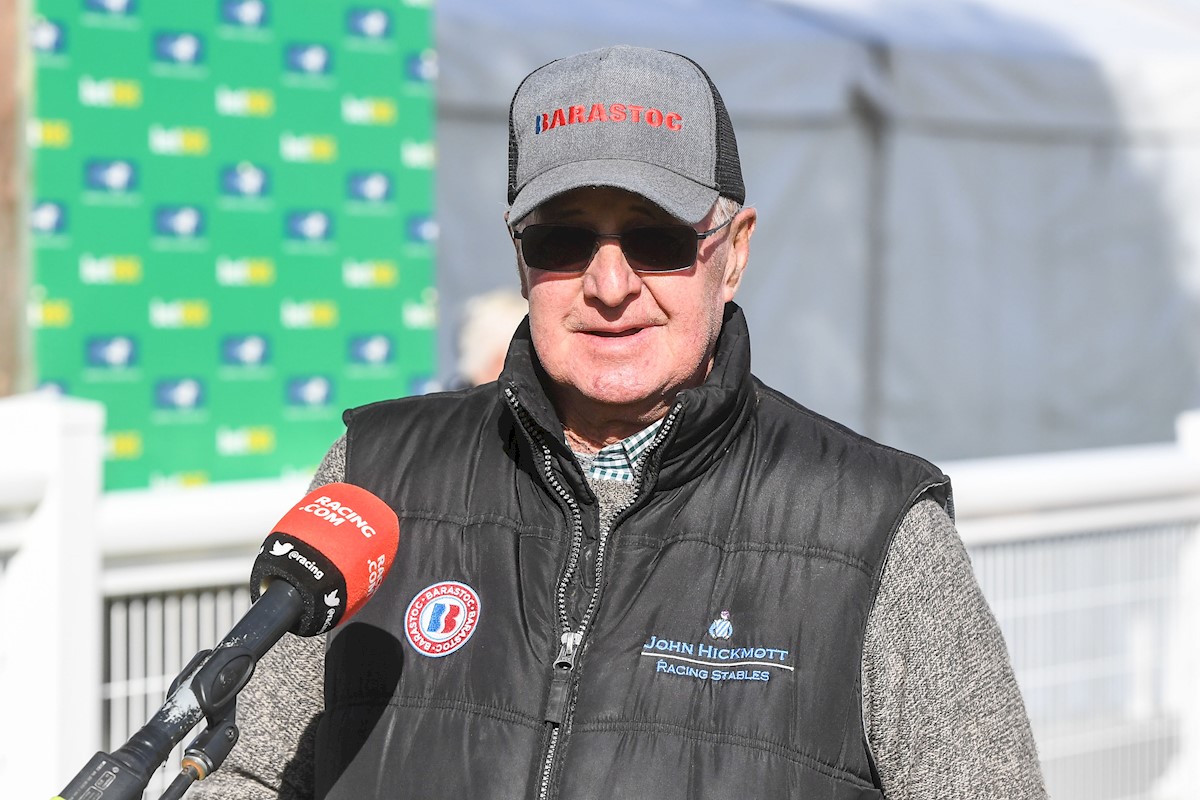
John Hickmott will seek judgement from a “real court” in a bid to clear his name after he was the latest trainer to be convicted and fined in the widening Formestane drug saga.
But the veteran trainer fears the financial toll of the case – he stands to be out of pocket more than $50,000 before any appeal takes place – may be too much to for his small country stable to withstand.
Hickmott and training parter Carina Riggs pleaded not guilty to presenting Classy Kenny to race with the banned substance and its metabolite 4-Hydroxytestosterone when he won at Morphettville in August 2025.
Like all trainers that have previously been convicted on the same charge in Victoria and Tasmania, the trainers maintained their innocence and could offer no explanation how the horse was found to have traces of the banned substances in the urine.
Subsequent blood, hair and urine samples were negative and stewards have not been able to produce any evidence of wrongdoing, error or contamination.
Hickmott confirmed that he will appeal the finding at the SA Racing Appeals Tribunal as a start before considering his options in a higher court.
“The whole thing is just so unjust,” Hickmott said.
“I’m going to appeal it but who am I meant to appeal it to?”
“Until it’s out of their (racing authorities) hands, I’m not sure we’re going to get a common-sense outcome.”
“I want to take it to a real court of law.”
“They’ve done me on presentation and as the rule is written, I’m guilty because the horse has returned a positive swab.”
“All the evidence is pointing to trainers being innocent but we’re still getting done for it because they (stewards) don’t have to prove anything for the presentation charge.”
“But if it turns out there’s even the slightest chance that Formestane is endogenous, how can the rule stand up to scrutiny?”
Betsy last week reported that Racing Victoria CEO Aaron Morrison has committed to funding research to determine whether Formestane is naturally occurring in trace amounts in horses, as is the case with humans.
Another research piece has been conducted by a UK-based scientist and, while it was the subject of a recent presentation at a veterinary conference in Melbourne attended by officials form both RV and Racing SA, no findings have been made public.
Hickmott called on authorities to wait until there is a definitive answer about whether Formestane is endogenous [naturally produced by horses] before current cases are heard by stewards and tribunals.
“It’s great that the Racing Victoria CEO has committed to researching this and getting to the bottom of it but the truth is that the study should’ve happened before all these cases were heard,” he said.
“Why can’t the cases be set aside until then?”
“If there is some doubt or uncertainty over the science, which it seems like there is, how can the stewards continue to prosecute trainers?”
The outcome of Hickmott and Riggs’ case follows a similar $2000 fine that was handed to Morphettville trainer Chris Bieg several days earlier.
Bieg’s horse Full Of Courage returned a positive post-race urine sample after winning at Murray Bridge in January this year.
Bieg, who is the SA President of the Australian Trainers Association, pleaded guilty to the presentation charge.
Both horses were disqualified from the races they won and banned from racing for 12 months, as is standard practice under the rules for exogenous anabolic steroid administration.
Similar charges against Patrick Payne and Tom Dabernig are expected to be heard by the Victorian Racing Tribunal in the coming months, while several other Victorian trainers have been notified that their horses have returned a Formestane positive.
More than 20 Formestane positives have been reported by Victoria’s RASL lab, which tests samples for Victoria, SA and Tasmania, across both the thoroughbred and harness codes.